Further Research:
Specific Endangered/
Threatened Species of Coral
http://www.nmfs.noaa.gov/pr/species/invertebrates/corals.htm
Some of the corals listed under the endangered species act:
Name: Elkhorn coral (Acropora palmata)
Status: Threatened
 |
Elkhorn coral - Photo by: Fausto De Nevi Herrera
https://www.edf.org/sites/default/files/slides/IMG_8302-718x377_0_0.jpg
Description:
Elkhorn coral is a large coal with antler like branches. It's main habitats are of the coast of Florida, the Bahamas and the Caribbean. The critical habitats of Elkhorn coral are listed as Florida, Puerto Rico, St. John/ St. Thomas, St. Croix.
Threats:
- disease, such as white band disease
- hurricanes
- predation
- bleaching
- algae overgrowth
- sedimentation
- temperature and salinity variation
- low genetic diversity
Name: Staghorn Coral (Acropora cervicornis)
Status: Threatened
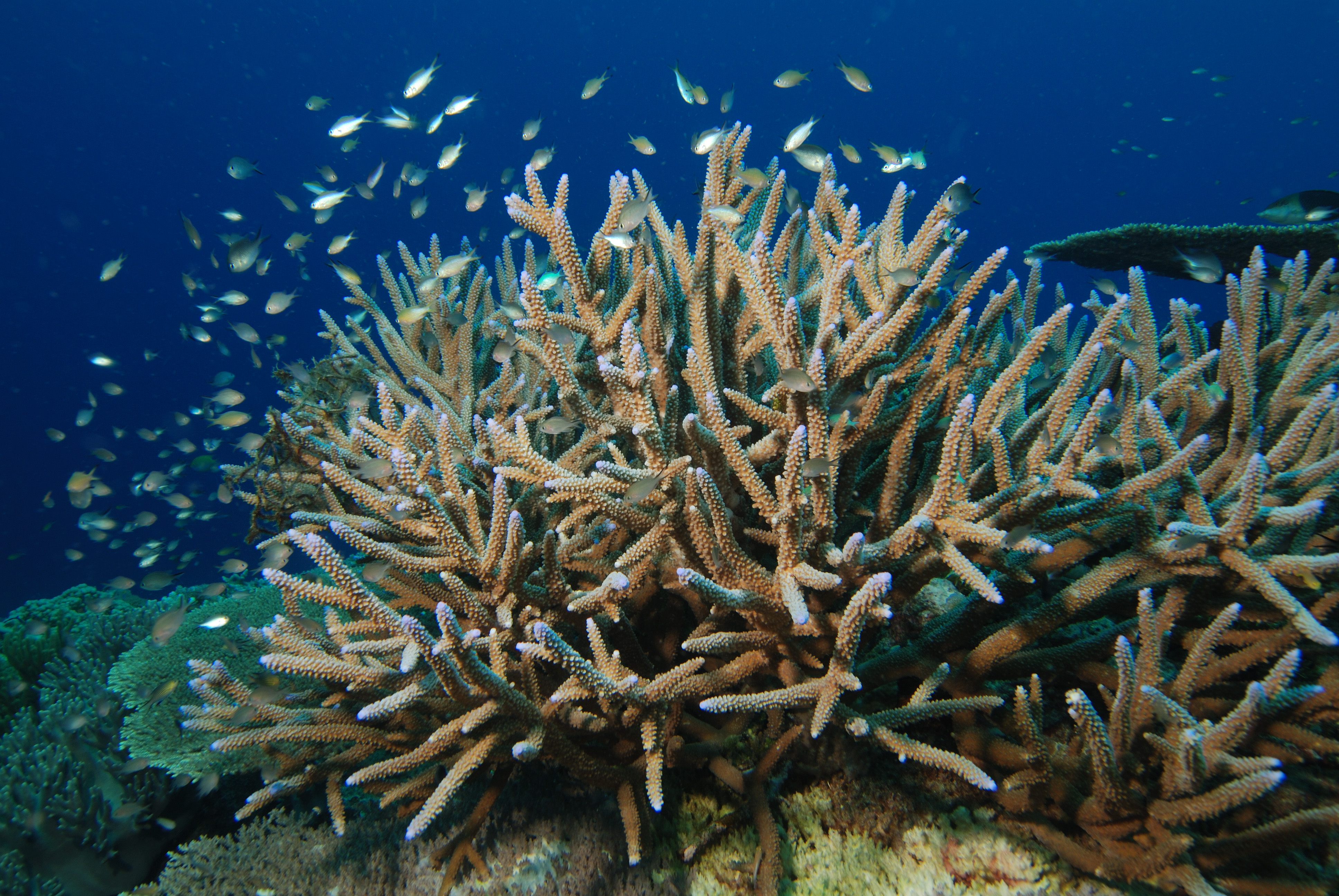 |
Staghorn Coral - No Author Stated (public domain) - https://upload.wikimedia.org/wikipedia/commons/thumb/c/cb/Hertshoon.jpg/1280px-Hertshoon.jpg
Description:
Staghorn Coral is a medium sized coral with cylindrical branches. It occurs in balck reef and fore reef environments. it critical habitats are listed as, Florida, Puerto Rico, St. John/ St. Thomas and St. Croix.
Threats:
- disease, such as white band disease, is their biggest source of mortality
- hurricanes
- predation
- bleaching
- algae overgrowth
- sedimentation
- temperature and salinity variation
- asexual reproduction, allows rapid population recovery from physical disturbances such as storms, but makes recovery from disease or bleaching difficult
- low genetic diversity
Name: Cantharellus noumeae
Status: Endangered
Cantharellus
coral - Lyndon Devantier
http://coral.aims.gov.au/factsheet.jsp?speciesCode=0566
|
Description:
Cantharellus noumeae is a mushroom shaped coral with a flat or concave surface and was named after the Chanterelle mushroom. It is a solitary species that remains attached to substrate in both the early and late stages of life. It is found in tropical marine waters, including sandy lagoons and sandy bays. Geographically it is found in areas of south easy asia.
Threats:
- Sedimentation from mining activities
- hurricanes
- predation
- bleaching
- algae overgrowths
- temperature and salinity variation
Name: Brain Coral (Dipioastrea heliopora)
Status: Threatened
Brain Coral - No Author Stated (public domain)
http://subaqua-old.web.cern.ch/subaqua-old/photos/2006-04-06-soudan-jcw/2006-04-06-Soudan-JCW-Images/29.jpg
Description:
Dipioastrea heliopora forms spherical brain like colonies, often 1 meter in length. Their colour is usually grey, cream, or sometimes greenish. Brain coral has been hound in the red sea, northern and southwest Indian ocean, central Indo-pacific,southeast Asia, Australia, japan, and china.
Threats:
- Mining for the aquarium trade
- Climate change
- Disease
- Bleaching
- Damage from construction
- storms and hurricanes
- ocean acidification
Name:Tubastraea floreana
Status: Endangered
Tubastraea floreana - Paul Humann- fishid.com
http://cdn2.arkive.org/media/DB/DB407F9C-C69C-4814-8BA8-2A4BB13E87B2/Presentation.Large/Floreana-coral-.jpg
Description:
Tubastraea floreana is an azooxanthellate coral, meaning that it feeds by capturing zooplankton in their outstretched tentacles. They are found only in the Galapagos and near Ecuador.
Threats:
- The main threat and reason for decreased population of this species was the El Nino event of 1982/83. According to arkive.org an El Niño even is "A natural phenomenon that happens every 4 to 12 years, and lasts for several months, when upwelling of cold, nutrient-rich water does not occur. This causes the warming of ocean surface water off the western coast of South America and causes die-offs of plankton and fish. It also affects Pacific jet stream winds, altering storm tracks and creating unusual weather patterns in various parts of the world."
- Other variations in water temperature, such ans global warming will also effect this species.
Full list of Corals listed under the Endangered Species Act
Threatened coral species:
- Acropora palmata -
Elkhorn coral
- Acropora cervicornis -
Staghorn coral
- Dendrogyra cylindrus -
Pillar coral
- Mycetophyllia ferox -
Rough cactus coral
- Orbicella annularis -
Lobed star coral
- Orbicella faveolata -
Mountainous star coral
- Orbicella franksi -
Boulder star coral
- Acropora globiceps
- Acropora jacquelineae
- Acropora lokani
- Acropora pharaonis
- Acropora retusa
- Acropora rudis
- Acropora speciosa
- Acropora tenella
- Anacropora spinosa
- Euphyllia paradivisa
- Isopora crateriformis
- Montipora australiensis
- Pavona diffluens
- Porites napopora
- Seriatopora aculeata
Endangered coral species:
- Cantharellus noumeae
- Siderastrea glynni
- Tubastraea Floreana
Sources:
Corals listed under the Endangered Species Act
http://www.nmfs.noaa.gov/pr/species/invertebrates/corals.htm
Elkhorn coral (Acropora palmata)
http://www.nmfs.noaa.gov/pr/species/invertebrates/elkhorncoral.htm
Staghorn Coral (Acropora cervicornis)
http://www.nmfs.noaa.gov/pr/species/invertebrates/staghorncoral.htm
Cantharellus noumeae
http://www.arkive.org/cantharellus-coral/cantharellus-noumeae/
http://www.iucnredlist.org/details/133384/0
Brain Coral (Dipioastrea heliopora)
http://www.iucnredlist.org/details/133231/0
http://www.marinespecies.org/aphia.php?p=taxdetails&id=207417
Tubastraea floreana
http://www.arkive.org/floreana-coral/tubastraea-floreana/
http://www.iucnredlist.org/details/63580/0
|


No comments:
Post a Comment